
Horses carry their own soap. Their sweat contains a protein called latherin that acts like detergent: it cuts the surface tension of water so sweat spreads through a thick, waterproof coat instead of beading on top. Where tack rubs, between the hind legs, under the girth, the churning whips it white and foamy. The foam is the cooling system working.
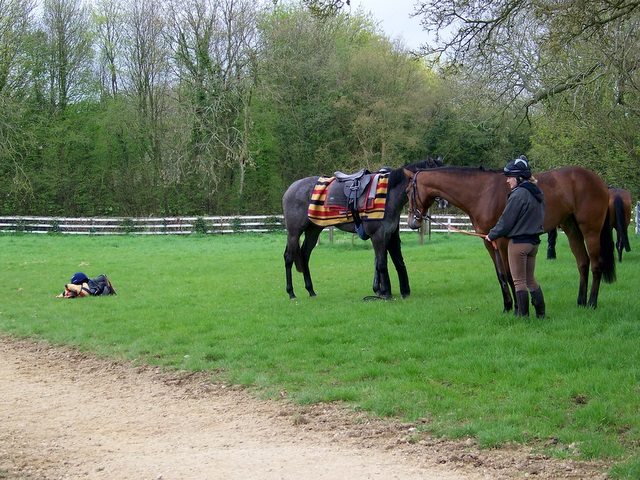
Your horse sweats like almost nothing else on earth
Only horses, humans, and a few primates rely on sweating as their main way to dump heat. Horses sweat from glands packed across the whole body. Researchers have measured losses above 10 liters an hour in hard work, and a long-distance ride in heat pulls five to eight liters an hour out of a horse.
Human sweat is mostly salt water. Horse sweat carries a far heavier mineral load, sodium and chloride first, then potassium, magnesium, and calcium. A hard-working horse can empty himself out in an afternoon. Plain water alone does not put him back together.
The foam shows up where the work rubs
Latherin does its real job unnoticed, spreading sweat across each hair so evaporation can pull heat off the skin. Foam is the byproduct. Friction whips the protein-rich sweat into bubbles that hold. That is why the lather appears under the saddle, between the hind legs, along the neck where the reins lie. It is a friction map of the ride.
Watch the pattern, not just the foam. A horse that sweats evenly and cools down after is fine. A horse that should be sweating and is not may have anhidrosis, the inability to sweat, which is a vet call. So is sweating that never quits with rest, paired with flared nostrils that never settle. The foam itself is never the problem. What surrounds it can be.
Cooling out is a skill, not a waiting game
Walk the last five minutes of every ride, minimum. Get the tack off so heat can leave. Offer water early and often. The old rule about withholding water from a hot horse does more harm than good, because dehydration causes the very colic the rule was trying to prevent.
Hose or sponge with cool water, scrape it off, reapply. Water on the skin heats up fast, so one splash does little. Keep going until the breathing settles.
If your horse sweats hard more than once in a while, keep electrolytes in the tack room. Sweat takes minerals that hay and grain do not replace, and a hard ride's losses take a day or two to restore. Kentucky Performance Prod 044093 60cc Summer Games Plus Electrolyte Paste is the pick Horse & Rider's testers made for performance horses, and the formula grew out of sweat-composition research done for the 1996 Olympics.
The most useful habit: learn what your horse's normal sweat looks like. When it changes, either the work got harder or something else did. A winter coat complicates blanketing decisions, and cold months bring their own hydration problem.