
Horses roll to scratch itches they cannot reach and strip out loose hair. The dust or mud they pick up keeps flies off and sweat from sticking. A horse that paws a spot, drops, and grinds its back into the dirt is doing routine maintenance. The same move done frantically, over and over, means pain. Learning the difference is the whole job.
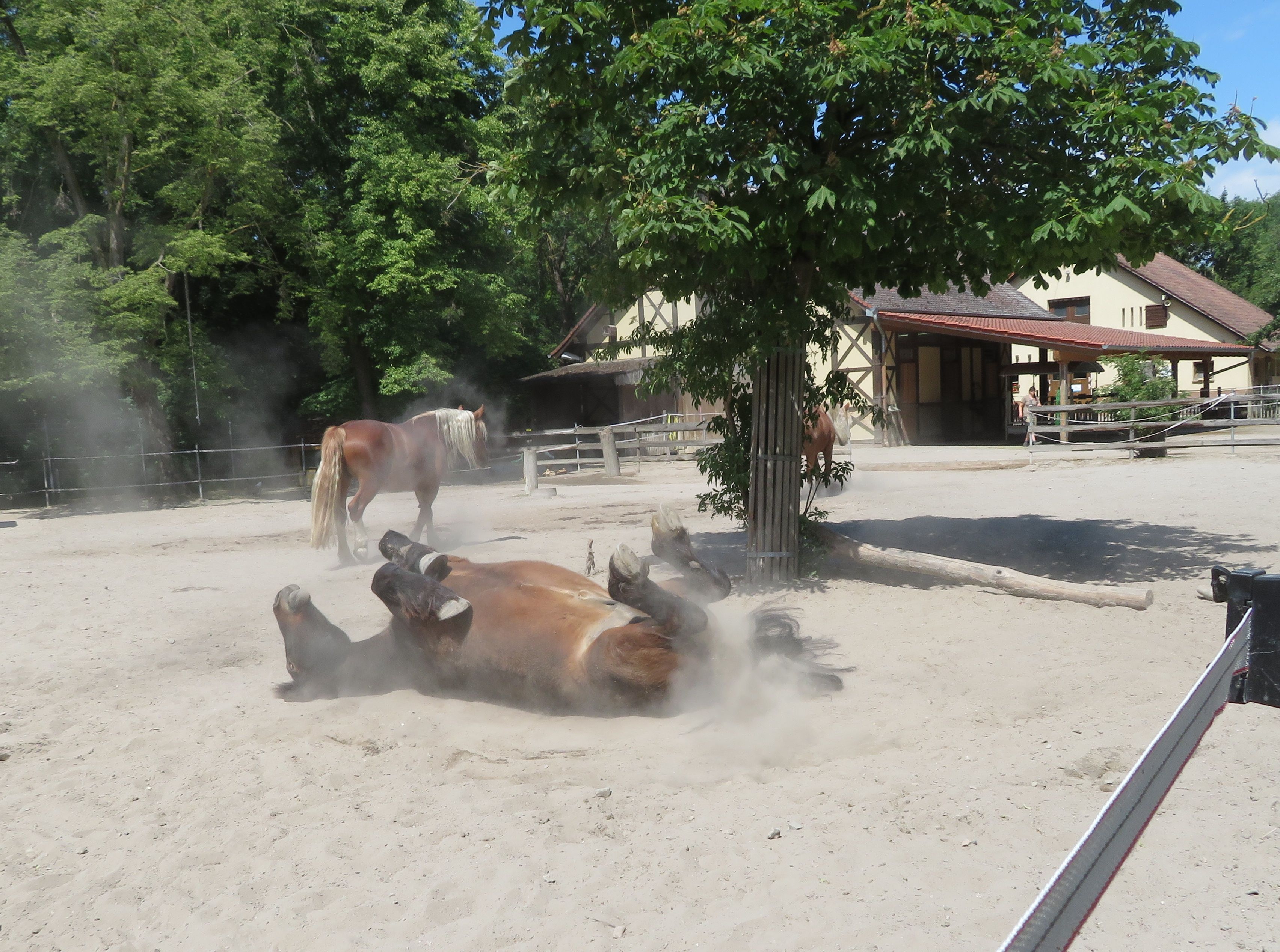
A roll is a full-body groom
Dust works like dry shampoo: it soaks up oil and sweat, lifts dead skin, and carries loose hair out of the coat. In spring, rolling strips the winter coat faster than any curry comb, and shared rolling spots wear into shallow dust bowls.
Mud cools the skin on a hot day and shields it against sun. It also blocks biting insects. A horse fresh from a bath heads straight for the dirtiest patch it can find. The bath stripped its scent and flattened its coat, and rolling puts both back.
Drying sweat itches, and dust takes the itch off. The white foam on a sweating horse is latherin at work, and rolling after a ride rubs the dried residue out of the coat. In winter, frantic rolling can mean the horse is too warm under its blanket, so check your blanketing decisions.
Horses only roll when they feel safe
A horse on the ground cannot run. Rolling means the horse trusts the ground, the herd, and the moment. That is why one horse rolling often sets off the next. Behavior consultant Sarah Clark calls rolling contagious, like a yawn moving through a room.
Watch the ritual before the drop: the horse paws the ground, circles, sniffs, and checks the spot for stones and hard lumps. Healthy horses almost never roll in a box. A stalled horse that has been rolling looks disheveled and sweaty, its bedding torn up.
Pain rolls look nothing like pleasure rolls
A colicky horse drops and rolls with no pattern to it. It gets up, paces, looks at its flank, paws, and goes down again, with no shake at the end of the roll. A healthy horse finishes with a full-body shake and walks off. A horse in pain finishes a roll and looks for its belly.
Other signs stack up beside the rolling: patchy sweating, refused feed, little manure, a dull eye. Penn State Extension lists lying down and rolling often, flank watching, and kicking at the belly among the standard colic signs. Texas A&M vets say to get your vet involved at the first sign of abdominal discomfort, because colic is best resolved early.
Vets disagree on whether to stop a colicky horse from rolling. The British Horse Society says letting one roll will not make colic worse. The real danger is the space: a thrashing horse can get cast against a stall wall or break a leg on fencing. Move the horse somewhere open if you can, and keep yourself out of the way.
Learn your horse's normal roll: watch three of them and note how each ends. Then the day the roll looks wrong, you will know it in seconds. A pleasure roll ends with a shake. A pain roll ends with a stare at the flank, and that is a vet call.