
The first cold snap sends owners to the tack room. The horse, meanwhile, has been preparing since September. Coat growth follows daylight, not temperature, and a healthy horse in a full coat is a furnace with legs. The question is whether your horse, in his coat, in his condition, in this weather, needs help.
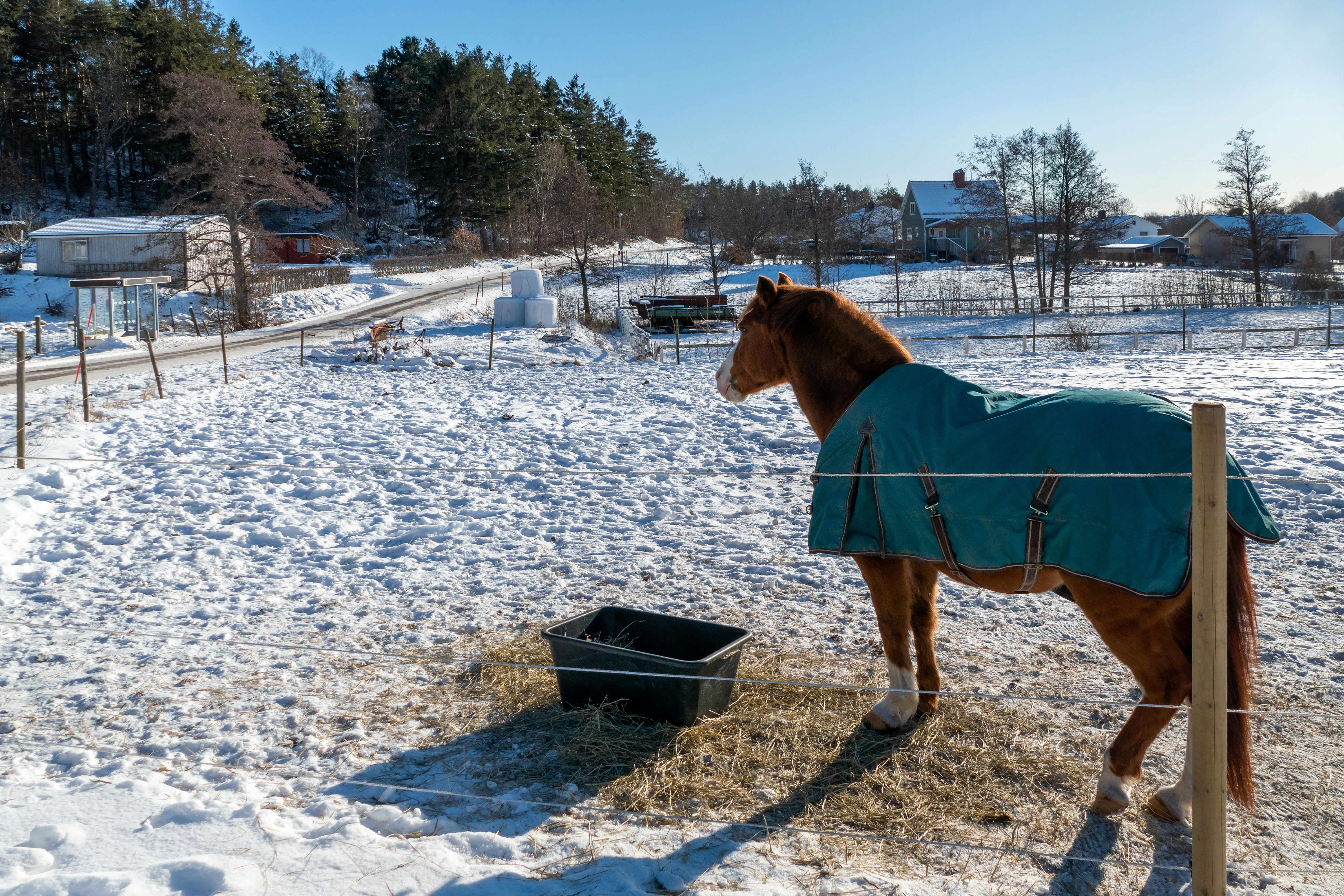
A full coat handles more cold than you expect
The lower critical temperature is the point where a horse starts burning extra energy to stay warm. Minnesota extension puts it near 18 degrees Fahrenheit for a horse in a winter coat, and near 41 degrees for a horse in a summer coat. That gap is the whole story: the coat does the work.
Coats grow as days shorten and keep growing until the winter solstice, December 22. Blanketing before that date can reduce the natural coat, because the blanket does the insulating and the body dials back.
Most blanketing mistakes come from dressing the horse for the owner's comfort. A healthy adult in a full coat, with shelter and hay, often needs nothing until temperatures approach 10 to 0 degrees. Hay is the first adjustment, not fabric: hindgut fermentation gives off heat, and a horse needs about 1 percent more energy for every degree below 18.
Wet and wind change the math
A dry coat traps warm air. A wet coat loses it. As little as 0.1 inch of rain can mat the hair, cut its insulating value, and cause cold stress. Snow troubles a horse less than rain: it sits on top of the coat instead of soaking it. Freezing rain and wet wind are the worst combination.
Minnesota extension lists the cases where blanketing is necessary: no shelter with temperatures or wind chill below 5 degrees; a chance of wet from rain, ice, or freezing rain; a clipped coat; a very young or very old horse; a horse not acclimated to cold; a body condition score of 3 or less.
The thermometer alone lies. A dry, calm 15-degree day asks less of a horse than a wet, windy 35-degree day. Check the forecast for wet and wind before cold, and blanket for the weather the horse will actually stand in.
Use the scale, then adjust for the horse
Maine extension publishes a simple scale for a full-coated horse: 40 and up, no blanket; 25 to 39, no blanket or a rain sheet if raining; 15 to 24, light or midweight; 0 to 14, heavyweight; below 0, heavyweight with liner and hood. A clipped horse needs more at every step: a rain sheet or lightweight at 40 to 50, a heavyweight by 15 to 24, and a heavyweight with liner and hood below 15.
Fit and routine matter as much as weight. A poorly fitted blanket rubs sores along the straps. Remove it daily, check for damage, reposition it, and keep it dry. Never put a blanket on a wet horse. Slide a hand under the rug at the chest: warm and dry means the layer is right, damp means too much, cool or shivering means add forage and more coverage.
Blanketing is a daily decision, not a seasonal one. Change layers as the day changes, and reassess body condition weekly. The blanket is a tool, and it helps only when it fits the job that day.