
A 1,000-pound horse needs about 20 pounds of hay a day in winter. Extension services repeat one rule for that number: feed 2 percent of body weight in forage daily. A flake is not a unit of feed. A pound is.
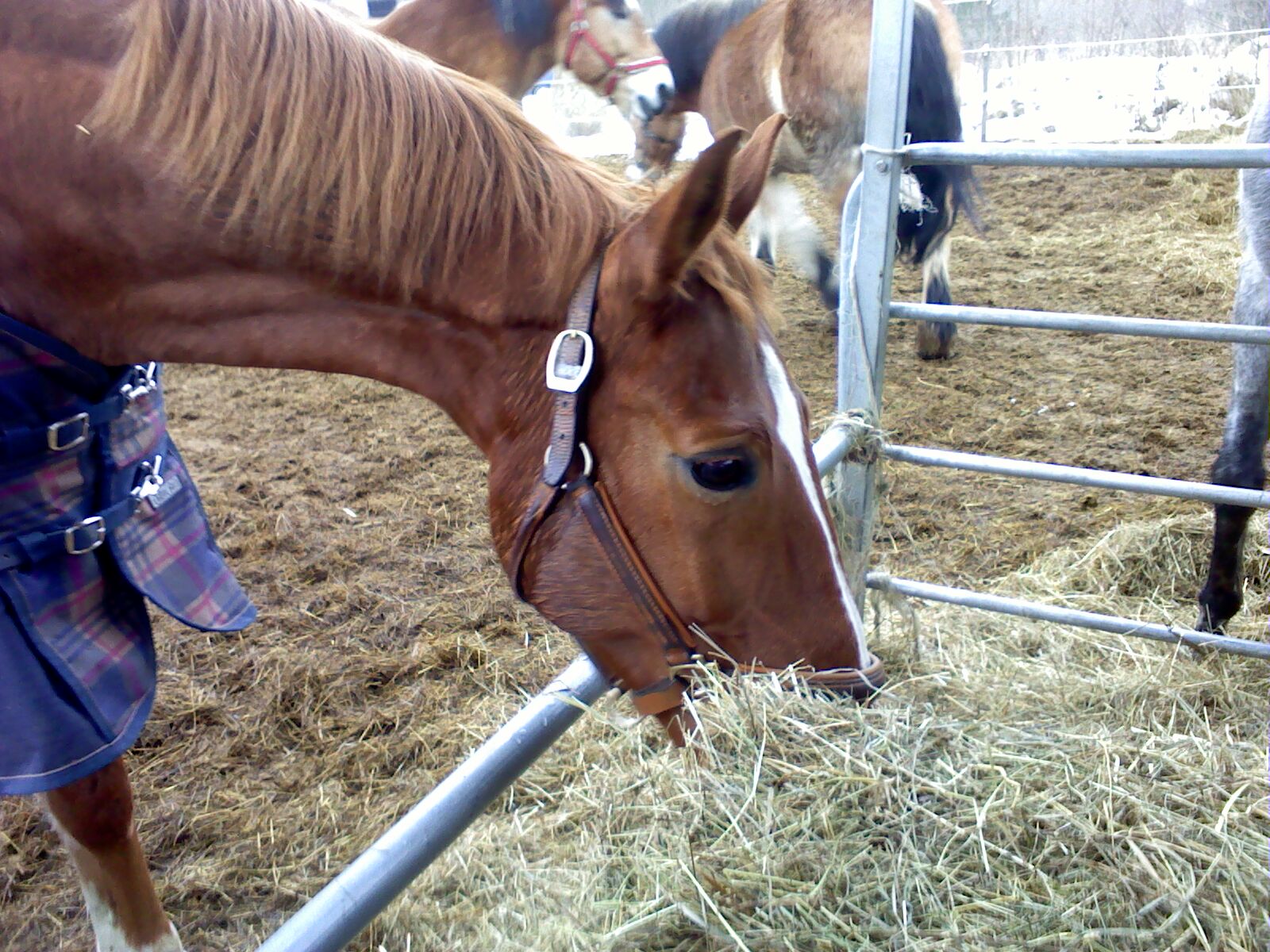
Hay does the heating
Microbes in the cecum and large intestine ferment fiber, and that fermentation gives off heat. Grain is digested by enzymes in the small intestine, so it delivers calories with less heat. North Dakota State University Extension states the point plainly: high-fiber feeds produce more heat during digestion than low-fiber grains such as corn and barley.
When the temperature drops, add hay first. Extension guidance for cold periods puts the floor at 1.5 to 1.75 percent of body weight as hay, which is 15 to 17.5 pounds for a 1,000-pound horse, and the 2 percent rule covers that floor with room for a horse in work. Grain still has a place for a hard keeper or a horse in heavy work, but grain is not the heater. Hay is.
Flakes lie, pounds do not
Bale weight varies, and flake weight varies inside the bale. Weigh one flake on a bathroom scale or a hanging scale, then count flakes to reach the pound target. A horse that gets three flakes at breakfast might get 12 pounds one week and 18 the next, depending on how the baler packed the bale.
Penn State Extension works the winter math for a 1,100-pound horse: 2 percent of body weight is 22 pounds a day, and 22 pounds over 150 days is 3,300 pounds before waste. That number is the feed eaten, not the feed bought. Waste comes next.
Waste decides how much to buy
Hay fed on the ground without a feeder wastes 57 percent, according to University of Maryland Extension feeder data. A circular free-choice feeder wastes 13 to 33 percent, and a restricted-access feeder wastes 5 to 11 percent. The feeder is a feed purchase, not a barn accessory.
Penn State adds 5 percent storage waste and 13 percent ground-feeding waste to the 3,300-pound figure, which reaches 3,915 pounds: almost 2 tons, or 98 bales at 40 pounds each. North Dakota State uses a simpler waste allowance of 20 percent, which turns a 20-pound daily ration for a 1,000-pound horse into 24 pounds bought per day. Pick one method, write it down, and order to that number.
Feel under the coat
A winter coat and a blanket hide weight loss. University of Maryland Extension warns that a hair coat or blanket gives a false sense of body score, so owners need to feel the horse instead of looking at it.
Run a hand over the ribs, neck, and topline once a week. Ribs that are hard to find mean the ration is too generous. Ribs that show under a light press mean the horse needs more hay before more grain. A weekly hand check catches a slide in November, when it costs a few extra pounds of hay to fix, instead of in February, when it costs a vet call and a feeding overhaul.