
Colic is abdominal pain, not one disease. It is the leading cause of death in horses aged 1 to 20, accounting for 31.2 percent of deaths in a USDA national study. A horse that paws and watches its flank is already telling you something. Call your vet at the first sign. Mild colic can turn surgical while you watch and wait.
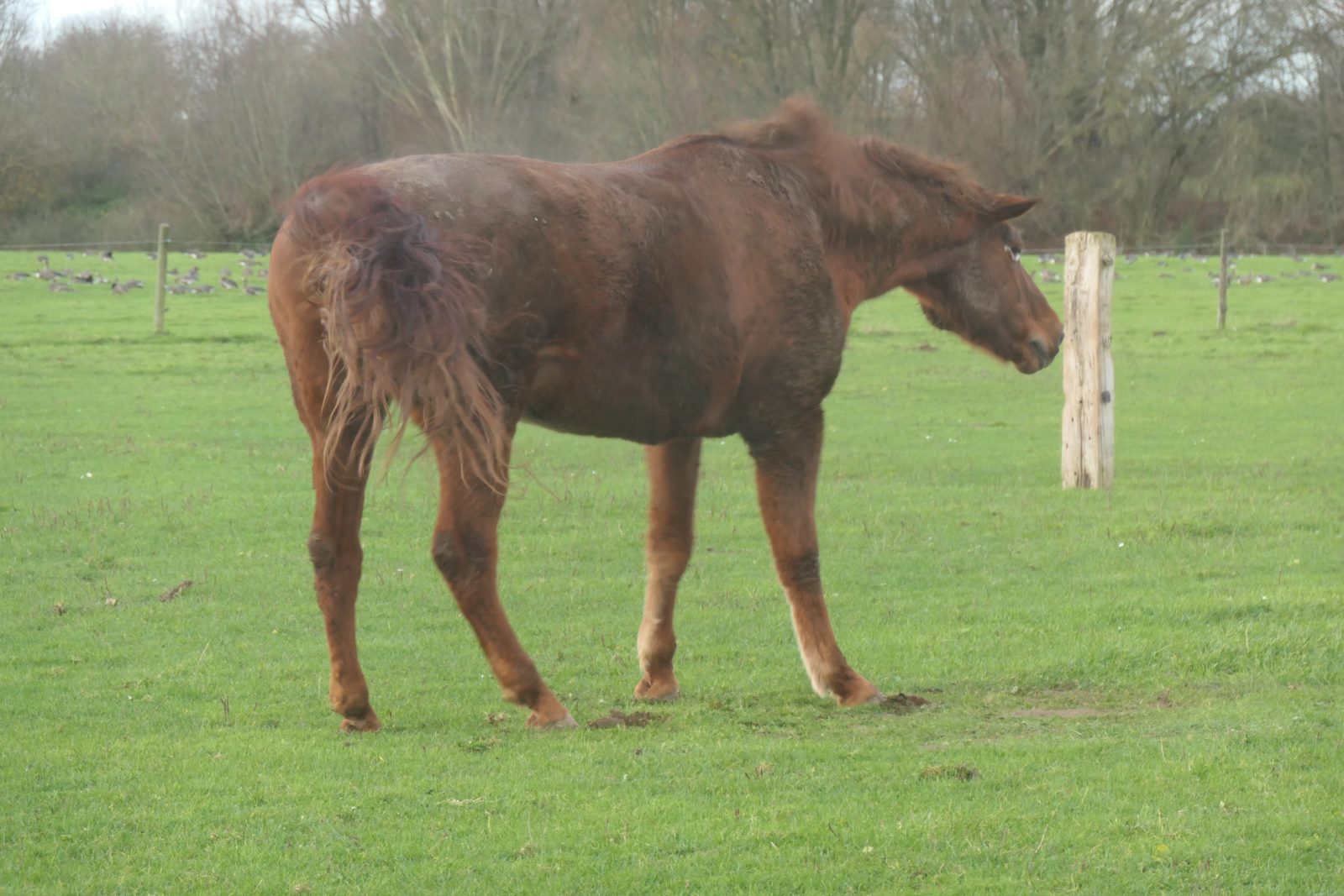
The first sign is a change in behavior
Early colic rarely looks dramatic. The horse goes off feed, passes less manure, curls its lip, or lies down more than usual. Then come the signs most owners recognize: pawing, flank-watching, teeth grinding, getting up and down, rolling. A bloated belly or kicking at the abdomen means the pain is worse.
Know the normal numbers before you need them. A healthy adult horse runs a temperature of 99 to 101 degrees Fahrenheit, a heart rate of 24 to 48 beats per minute, and a breathing rate of 10 to 24 breaths per minute. A heart rate climbing past 60 while the horse stands still is a red flag.
Most colic comes from gas, a blockage, or a twist
Vets sort colic into three groups. Intestinal dysfunction covers gas colic, spasmodic colic, and impaction colic, where feed blocks the gut. Intestinal accidents cover a twist or displacement, which cuts off blood flow. Inflammation covers enteritis, colitis, and gastric ulcers.
The triggers are ordinary management mistakes: a sudden feed change, dry feed with too little water, sand picked up from bare ground, a heavy parasite load, or spoiled feed. Research on the equine microbiome adds another layer: when gut bacteria lose diversity, colic episodes last longer and large colon lesions become more likely.
The first ten minutes decide the outcome
Call the vet first. Tell them when the signs started, what the horse is doing, when it last passed manure, and whether feed or turnout changed in the last two days. Take the feed away and leave water available unless the vet says otherwise.
Walk the horse gently if it is calm enough to lead. Walking can settle mild gas colic and keeps a restless horse from throwing itself down. Stop if the horse wants to lie down or starts rolling hard. Never give pain medicine without the vet telling you to. Bute and Banamine mask the signs the vet needs to judge how bad it is.
Prevention is feed and water discipline
Keep water in front of the horse at all times. Impaction colic follows dry feed and short water, and winter is the worst season for it: horses drink less when the water nears freezing. How much water a horse drinks in a day sets the baseline to watch.
Slow the eating down: a horse that bolts its hay swallows air and half-chewed feed. The Weaver Leather Slow Feed Hay Bag holds two flakes behind a mesh front so the horse pulls small mouthfuls instead of gulping. Change feed over a week or more, keep up the deworming schedule, and check the manure pile each morning. A smaller pile is often the first sign of trouble.
Save your vet's number in your phone tonight and write the normal vital signs on the stall door. The horse that colics at midnight gives you minutes, not hours.