
Laminitis is the failure of the laminae, the tissue that hangs the coffin bone inside the hoof wall. When that bond weakens, the bone can rotate or sink, and the foot stops working as a unit. Most cases start outside the foot, in the horse's hormones. Suspected laminitis is a veterinary emergency, so call the vet first.
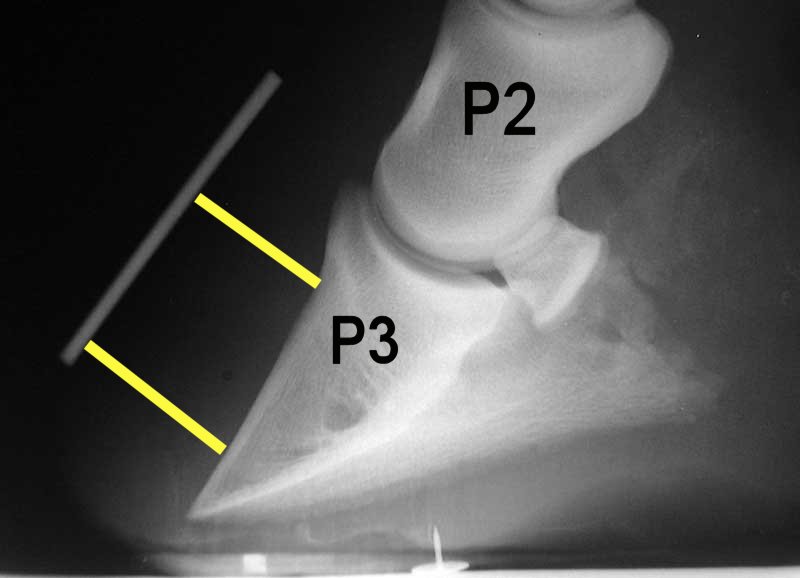
The coffin bone hangs from the hoof wall
The bony column of the leg does not rest on the hoof. It hangs from the inside of the hoof capsule, suspended by interlocking laminae. Laminitis injures those layers. In severe cases the capsule separates and the coffin bone drops toward the sole.
Hormones cause most cases
The Merck Veterinary Manual calls endocrine dysfunction probably the most common underlying cause of laminitis today. The driver is too much insulin. Two conditions sit behind it: equine metabolic syndrome, which shows up in easy keepers with cresty necks, and PPID, the pituitary disorder owners know as Cushing's disease.
A Finnish hospital study found an endocrine disorder in 89 percent of 36 horses brought in for laminitis: one third had PPID, the rest high insulin without the shaggy coat.
Grain and grass can trigger it too
A horse that breaks into the feed room can founder on grain. Undigested starch reaches the hindgut, ferments, and produces lactic acid. The acid kills gut bacteria, the bacteria release toxins, and the toxins reach the feet through the blood. The same chain runs on pasture, when a horse on lush spring grass takes in more sugar and starch than its gut can handle.
Severe illness can do it too: colic, colitis, a retained placenta, or any infection that floods the body with toxins. So can one leg carrying the whole horse while the other heals. The foot looks like the problem. The trigger usually sits somewhere else.
The early signs are small
A laminitic horse shifts its weight from foot to foot and turns in tight, short steps. It plants its front feet forward and its hind feet underneath itself, the stance owners call camped out. The feet feel warm, and the pulse in the fetlock bounds under your fingers. Those are the AAEP's signs of acute laminitis, along with a reluctant, eggshell walk.
Learn the pulse now, while the horse is sound: two fingers over the artery at the fetlock. A bounding pulse in a horse that stands camped out and will not turn is the sign that sends most owners to the phone.
The first hour decides the outcome
The AAEP is blunt: suspected laminitis is a medical emergency, and the sooner treatment begins the better the chance of recovery. Stop the horse moving, take it off grain and grass, feed only grass hay, and bed the stall deep so the horse can lie down.
Cold has the strongest evidence in the first hours: the Merck manual calls cryotherapy the most effective way to limit damage. Ice boots, started early, do more than any drug given late. The vet and farrier then plan the long term: blood tests, a forage-based diet, and shoeing that takes load off the damaged laminae.
For the easy keeper, a grazing muzzle lets a horse stay out with the herd while cutting grass intake. The Best Friend Standard Grazing Muzzle clips to a breakaway halter and limits each mouthful without stopping grazing. The horse that founders in May was already insulin-dysregulated in March, so test before the grass comes in.