
Pick up a hoof and look at the underside. The dark, rubbery V in the middle is the frog. It runs from the heels about two-thirds of the way toward the toe and covers roughly a quarter of the bottom of the hoof. It is softer and springier than the horn around it, and it does three jobs every time the foot lands: it cushions the blow, it grips the ground, and it helps push blood back up the leg.
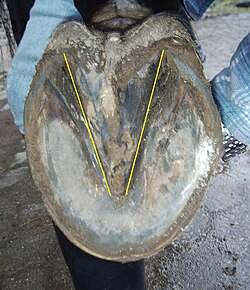
It cushions every landing
A horse lands with a ton of force on a foot the size of a saucer. The frog spreads that force out. As the hoof meets the ground, the pastern drops and the digital cushion, a pad of fibrous and fatty tissue above the frog, gets squeezed. The squeeze pushes the frog down onto the ground, the heels spread, and the energy of the landing dissipates sideways instead of jarring straight up the leg.
The frog also holds the heels together, and its grooves channel water and mud away from the sole as the foot loads. A frog that never touches the ground cannot do any of this, which is what happens when heels overgrow or a shoe lifts the back of the foot.
It helps blood get back up the leg
Blood has a long trip home from a hoof, and getting it back up a thin leg against gravity takes help. Each step provides it: when the foot loads, the frog and the structures above it compress and push blood out of the foot and up the leg.
How much of that pumping the frog does on its own is still debated. Some call it the pump; others call it a facilitator, one part of a system that includes the whole hoof mechanism. A horse moving around a pasture gets more of it than a horse standing in a stall all day.
A bad smell from the frog means thrush
A healthy frog is firm, dry, and wide at the heels, with no smell. A frog going bad turns soft, ragged, and black, and it stinks. That is thrush, a bacterial infection that thrives in wet, dirty bedding.
The fix starts with a hoof pick, not a bottle. Clean the foot every day, pick the packed mud and manure out of the grooves on each side of the frog, and keep the stall dry. Free-roaming horses wear their frogs into hard, smooth calluses; a stalled horse needs dry ground or the frog degrades instead.
For a frog that is already soft and smelly, Thrush Buster is the standard barn treatment. It goes on with a thin applicator tip that reaches into the grooves and stains the hoof purple, working until the color fades. Wear gloves; it stains skin as well as hoof. If the frog stays rotten after a week of cleaning and treatment, or the horse goes lame on the foot, call the farrier. Deep thrush can reach sensitive tissue, so a deep crack up the middle of the frog needs a professional eye.
Leave the trimming to the farrier
Your job is the daily check. Pick up each hoof, look at the frog, and smell it. Firm, wide, and dry means the foot is doing its work. Soft, narrow, and stinking means thrush is already there. Winter hoof care starts with the same habit, and whether a horse needs shoes comes down to the same question: is the foot, frog included, doing its job on the ground it works on.