
A horse pins its ears to tell you to back off. The ears press flat against the head, the face tightens, and the message is plain: give me room. That is the short answer. The longer answer is that ears tipped back are not the same thing, and reading the two apart keeps you safe around horses.
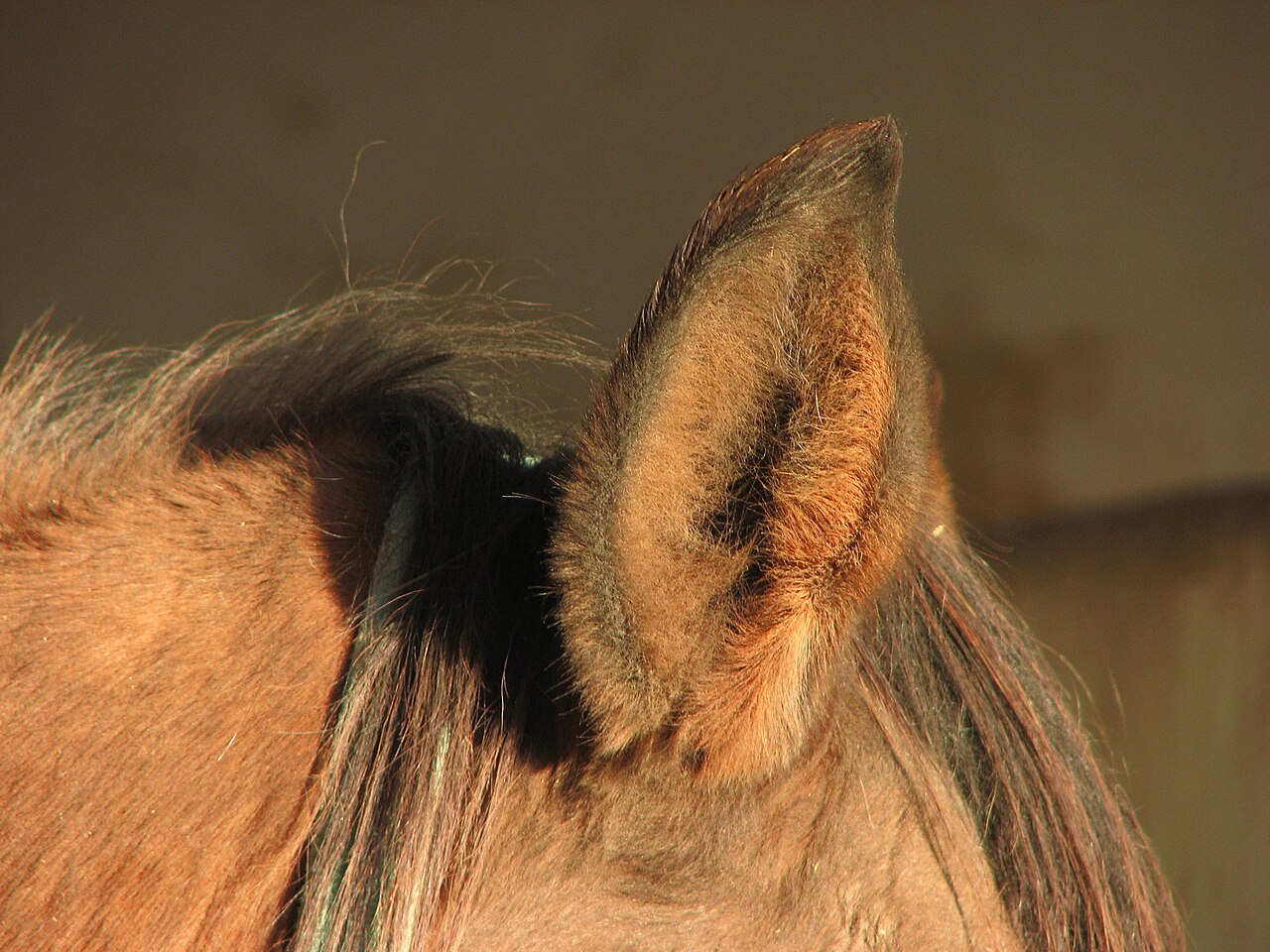
Flat ears are a warning, not a mood
A horse flattens its ears to make its threat visible from a distance. In the herd, that look moves another horse off feed or a patch of shade without a kick. Mares pin their ears to guard a foal. A horse at the feed tub pins its ears when a herdmate crowds in. The ears go down so the message lands before teeth or hooves get involved.
Watch what comes with the ears. A pinned ear plus a tight mouth and a swishing tail means the horse is ready to defend itself. A horse that pins its ears and steps toward you is escalating. Step back, give the horse room, and let the ears come up again before you move in. Horses that learn pinned ears make people leave will use the signal more, so the fix is space and calm handling, not a fight over who backs down first.
Ears tipped back mean the horse is listening
Not every backward ear is a pin. A horse under saddle often carries its ears tipped back toward the rider. The ears stay up, loose, and mobile. The horse is tracking your voice, your seat, and your hands. Working horses do this for hours without a shred of anger in it.
The test is the rest of the horse. Listening ears come with a soft eye, a loose jaw, and a body that keeps moving forward. Pinned ears come with tension in the poll and jaw and a body that has stopped or braced. If the ears are back and the horse is still working with you, leave them alone. If the ears are flat and the jaw is clamped, something is wrong.
Sudden ear pinning can mean pain
A horse that starts pinning its ears out of nowhere deserves a vet check before a training fix. A sore back, bad teeth, or a saddle that pinches all show up as pinned ears first. Research on ridden horses lists ears held back or flat among the behaviors linked to musculoskeletal pain. The horse cannot point at the sore spot, so it pins its ears when you touch the girth or ask for the canter.
Check the pattern. Ears pinned only when you tighten the girth point at the girth or the saddle. Ears pinned through the whole ride, plus stiffness and a reluctance to move forward, point wider. A horse that cribs or eats dirt is telling you something else, but pinned ears with a new behavior change belong on the vet list first.
The useful habit is simple: read the whole horse, not the ears alone. Flat ears, tight face, braced body means back off. Loose ears tipped your way means the horse is with you. And a horse that pins its ears where it never used to is asking you to find what hurts.