
Your horse yawns for the same reasons you do, and for one reason you do not. A yawn stretches the jaw, shifts the horse from one state to another, and signals something about the horses around him. A single yawn after a ride means little. A horse that yawns over and over in his stall is telling you something else.
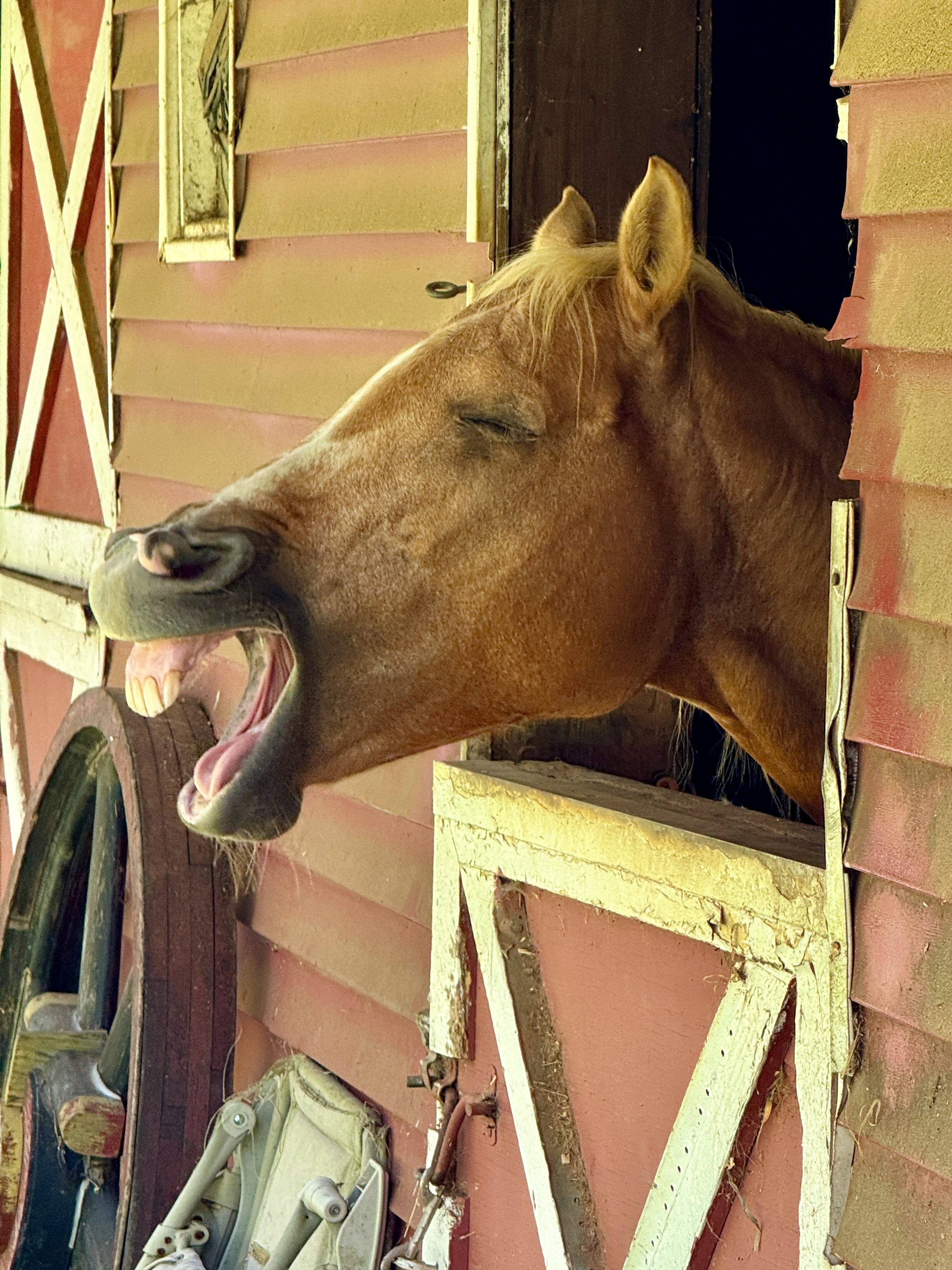
Yawns spread between friends
In 2024, researchers at the University of Pisa watched 48 horses on pasture and found the first clear evidence that yawning is contagious in horses. A horse that saw a herdmate yawn was more likely to yawn itself, and the effect was strongest between horses with a good relationship. Mares answered the yawns of kin faster than the yawns of other horses, and mares that groomed each other often answered fastest of all.
The study also found two shapes of yawn. One keeps the teeth covered. The other bares them, like the palomino in the photo. Both count as yawns, and both spread the same way.
If your horse yawns back when you yawn, the same mechanism may be at work. Horses in the study caught yawns from horses they liked. A yawn after untacking can be a small sign that the horse is settling in your company.
Horses under stress yawn more
Yawning also tracks with tension. A 2011 study of riding school horses found that horses with stereotypic behaviors yawned more often than horses without them. Yawning rose at the same times of day the stereotypies did, and the horses that cribbed or wove the most yawned the most.
That pattern fits what trainers see at the barn. A horse yawns during a tense moment in a lesson, while waiting for feed, or when a new horse arrives next door. Vets and behaviorists describe the yawn as a displacement behavior, something the horse does to bleed off tension when it cannot act on what it wants.
Watch the clock, not just the yawn. A yawn that shows up with weaving or cribbing points at the routine around the horse, not at the horse. More turnout and more forage do more than any supplement. If the yawning comes with a dull eye, a tucked belly, or a horse that flinches at the girth, check for soreness and call the vet.
A yawn after work is a release
The third common yawn comes when the pressure drops. Horses often yawn as they cool out after a ride, during bodywork, or when a vet works an acupuncture point. Trainers call it a release. The jaw unclenches and the neck drops. The vets Chewy interviewed say the endorphin explanation is plausible but unmeasured in horses, so treat it as a sign of relaxation, not proof of a chemical change.
That is the useful read. A yawn at the end of a session says the horse has let go of the work. A yawn at the start of a session, before you have asked for anything, says the horse arrived tense.
Count the context, not the yawns. One yawn after a good ride is a compliment. Ten yawns in a stall, next to a horse that weaves, is a management problem. The mouth tells you which one you are looking at.