
Yes. Your horse knows your face, knows your voice, and can tell them apart from a stranger's. Horses in experiments picked their keeper out of a photograph six months after last seeing them, and they changed their behavior toward a person based on a photograph they had seen hours earlier. Memory like that shapes every ride.
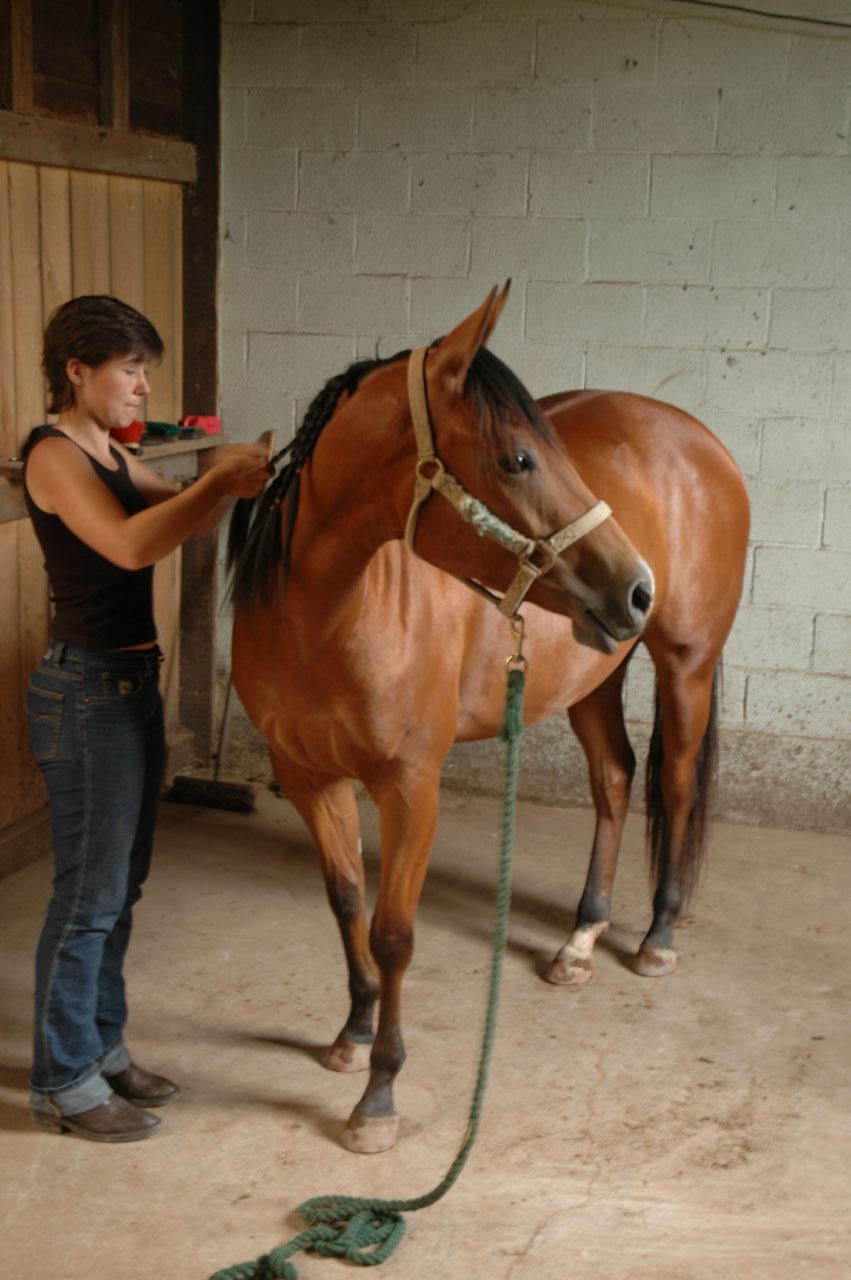
Your horse matches your voice to your face
In 2012, researchers at the University of Sussex played a recorded voice from a speaker placed between two people: the horse's owner and a stranger. Thirty-two horses looked toward their owner faster and longer when the owner's voice played. A second test with 39 horses and two familiar people showed the same pattern. The horses were not reacting to a familiar sound alone. They linked a specific voice to a specific face.
That link matters in the barn. A horse that hears your voice from the next stall already knows who is coming before you appear. It also explains why a horse can act differently with a new handler who uses the same words. The words are the same. The voice is not.
A photograph works, even after six months
A French team led by Léa Lansade took the test further in 2020. Eleven mares learned to pick a face on a touchscreen by touching it with their nose. Then the researchers showed them photographs of their current keeper, a keeper they had not seen for six months, and strangers. The mares chose their keepers far more often than chance, at about 75 percent accuracy, for both the current keeper and the one gone half a year.
A horse that has only ever seen you in three dimensions, in a barn, wearing a hat, can still recognize your face flat on a screen months later. Time away does not erase you. Horses hold onto people the way they hold onto places and routines.
Your horse remembers how you treated it
Recognition is only half the story. In a 2018 study, horses saw a photograph of a person looking angry or happy. Hours later they met that same person in the flesh, now wearing a neutral expression. The person did not know which photograph the horse had been shown. The horses did. Those shown the angry face treated the person with caution. Those shown the happy face responded with more warmth. A different person drew no such reaction.
A 2016 study found the first step of this skill: horses shown photographs of unfamiliar happy and angry faces reacted differently to each, reading human expression from a still image. Horses see the world differently from us, and their vision shapes what they notice. A horse under stress shows it in small ways, like licking and chewing after the pressure drops. Put together, the work says a horse carries a record of you, not just your outline.
Time away does not reset the relationship
A horse you have not seen in months will still know you. It will also remember the tone of your last visits. That cuts both ways. A horse that learned you are calm and consistent greets you like an old friend. A horse that learned you are rushed and rough remembers that too, and it shows in the first minute back.
The practical point is simple. Move the same way and speak the same way each visit. Keep your temper out of the stall. Your horse is keeping notes. Make them good ones.