
A horse shies at a jacket on a fence rail it passed yesterday. Nothing moved. The horse is not being difficult. Its eyes work differently from yours, and the jacket looks different to each eye.
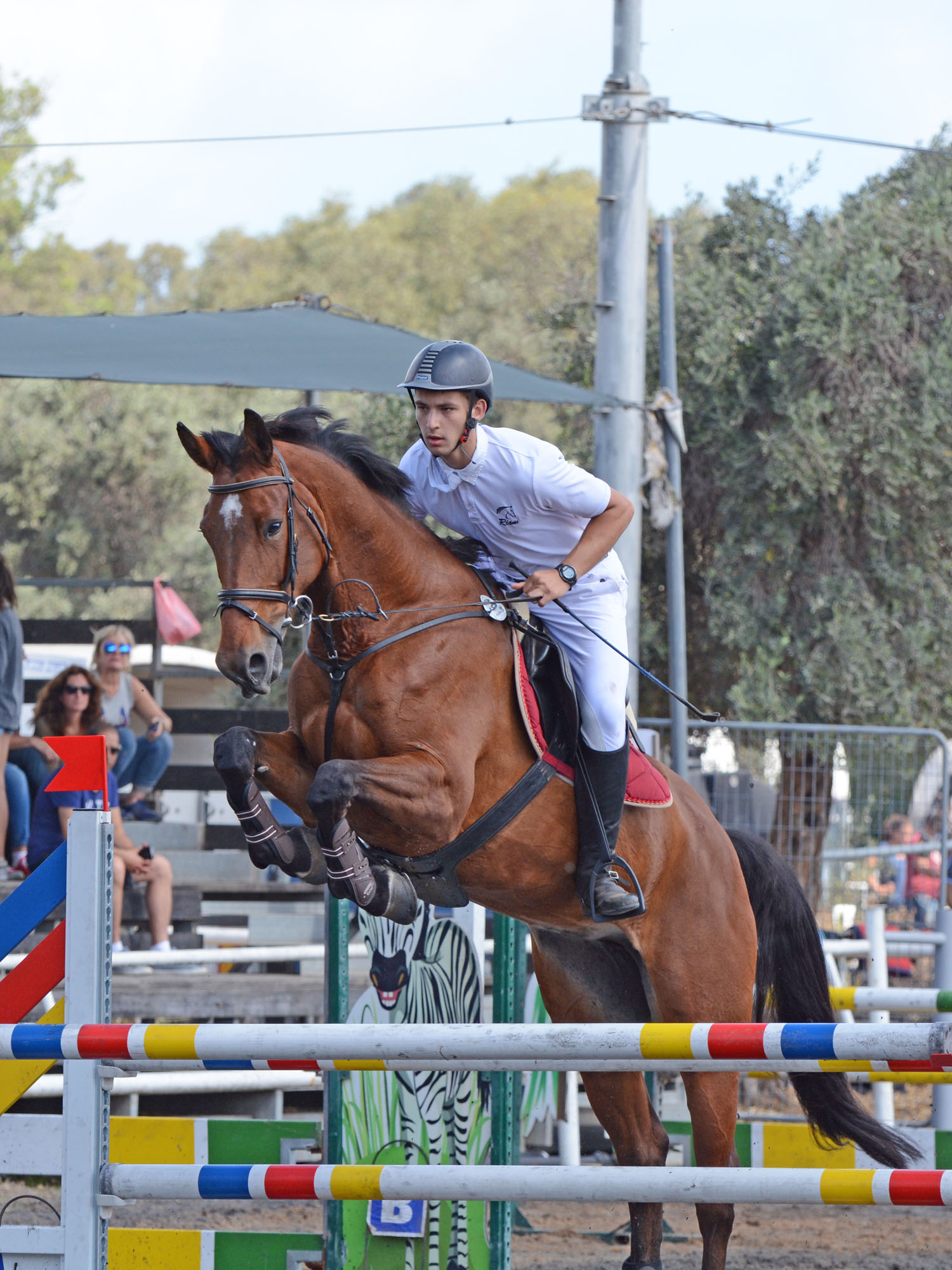
A horse sees around itself, but not in front of its nose
Eyes set on the sides of the head give a horse a field of vision close to 350 degrees. Each eye covers its own side, mostly alone. That one-eyed view is built to catch movement: a predator coming from the side, a branch shifting in brush. Detail is weaker than yours, and depth perception only arrives where both eyes overlap, in a narrow band in front of the face.
Two blind spots come with the layout: directly behind the horse, and a small patch right in front of its nose. A horse that drops its head to sniff a scary object is moving it into the zone both eyes can see. Let it. A rider who hurries the horse past steals the look the horse needs to settle.
The same layout explains the balk at the mounting block, the trailer ramp, the puddle. The horse sees the object with one eye from a distance, loses it up close, then meets it again with both eyes.
A horse sees blue and yellow, not your full color
Horses are dichromats. They see blues and yellows well and muddle reds, oranges, and greens. A red gate against green grass, vivid to you, can read as one flat wash to a horse. A single-color white fence can be harder to read than a striped one, because the horse judges edges and contrast more than color.
A sharp shadow across a path can read as a hole or a drop, because the horse's eye picks up contrast before it picks up detail. A horse that balks at a shadow is not refusing work. It is reacting to what its eye reports: a sudden dark edge where the ground should be flat.
Bright ground lines and striped poles give the horse edges to read. The same trick works at home. A white towel laid flat at the base of a scary step, or a pole on the ground before a ditch, gives the eye something to measure.
The spook is a switch between eyes, not a decision
When a horse turns its head sideways to stare at something, it is looking with one eye. When it raises its head and faces the thing square on, it switches to both eyes, and depth perception kicks in. That switch is where many spooks happen. The picture changes, and the horse reacts to the new picture.
Walk the horse past a new object in both directions, so each eye gets its own look. Stand the horse and let it look from each shoulder. Wait for the head to drop and the chewing to start. That head drop means the horse has moved the object into its two-eyed zone and decided it is not a threat.
When the horse spooks anyway, your job is narrow: stay balanced, keep your hands quiet, and ride forward past the thing or circle back to it. Punishing the spook teaches the horse that scary things come with pain, which makes the next spook bigger. A calm second look teaches the opposite.