
The swabs came out four times in an hour. Before the session, during it, right after, and twenty minutes later while the kids played quietly with toys. Seventy-two children, ages six to eleven, each giving saliva so a lab in California could read two molecules: cortisol, the stress hormone, and alpha-amylase, a marker of nervous system activity.
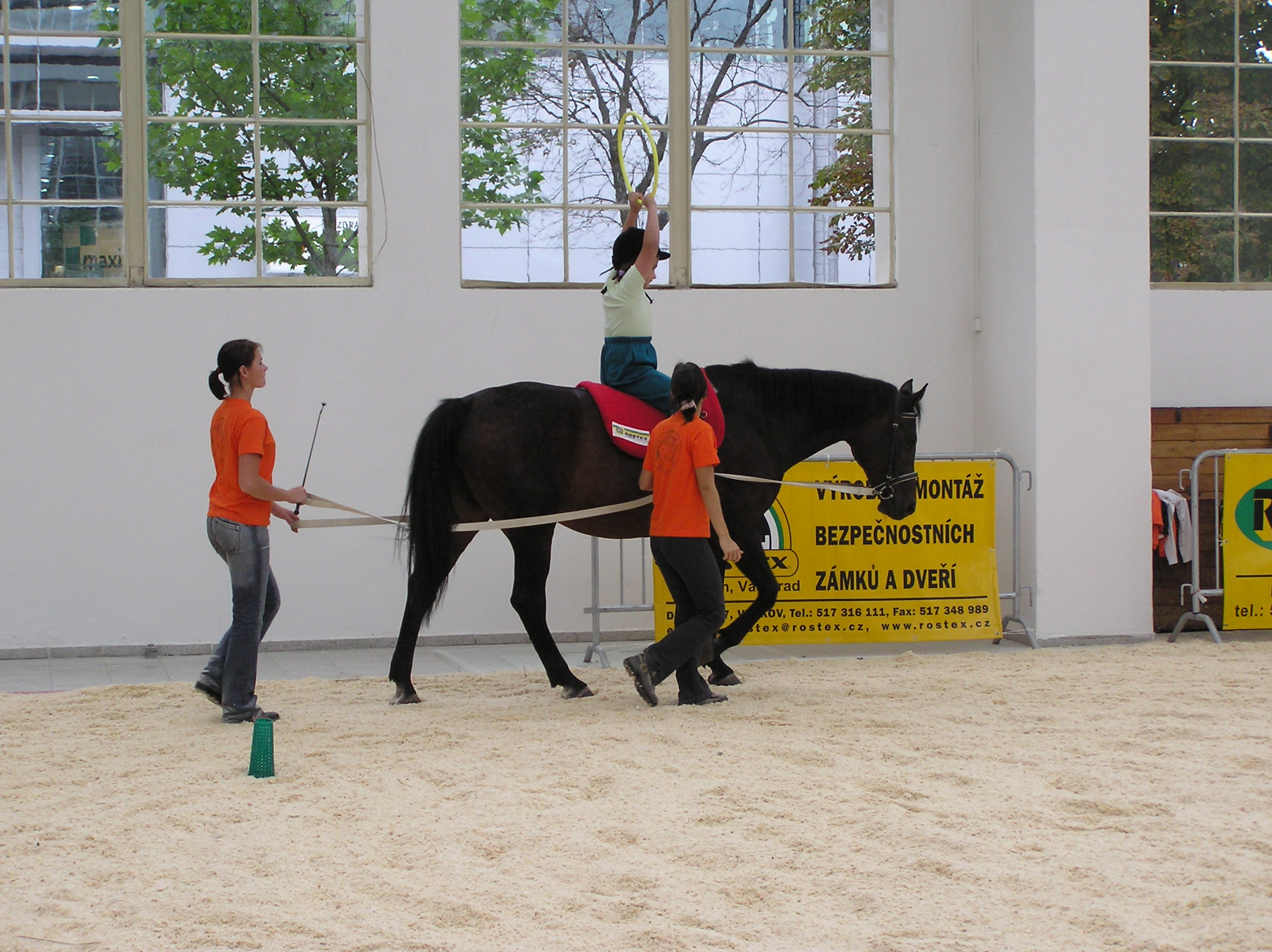
They were taking part in a randomized trial at Colorado State University's Temple Grandin Equine Center. Half the children did occupational therapy in a clinic. The other half did the same therapy, built on the same Zones of Regulation curriculum, mounted on a horse in an indoor arena. Forty-five minutes of activities on horseback, the same horse every week, with a leader, a side walker, and a certified instructor. One hour a week for ten weeks.
Cortisol dropped further in the horse group. Alpha-amylase rose during the session in both groups and settled back toward baseline within twenty minutes, the signature of a body that is activated and engaged, then recovering. Calm, not checked out. It is the first randomized trial to show a significant cortisol advantage for horse-based therapy over an active no-horse control.
The sigh of relief, quantified
Caiti Peters, the CSU assistant professor who led the research, has watched the moment the numbers describe. Autistic children often arrive at therapy in a state of physiological hyper-arousal. It looks like irritability or hyperactivity, and it shuts down participation. Then the child gets on the horse.
"You can see them calm down, almost like a big sigh of relief, which then enables them to better socially engage," Peters said.
That is why the biomarkers matter. Engagement predicts therapeutic outcomes. A child who cannot settle cannot take part, and nothing the therapist does reaches a child in full fight-or-flight. The horse gets the nervous system to a place where the therapy can land.
What this hands the people doing the work
For years, equine-assisted professionals have sold the "magic" on anecdote. Temple Grandin, the autistic animal scientist the center is named for, says horses saved her as a struggling teenager at her boarding school's barn, and families tell her their nonverbal children spoke for the first time after riding. Now there is a physiological account of why, measured against the same therapy without the horse.
That changes conversations. A bodyworker or therapeutic riding instructor can now talk to a parent, a doctor, or an insurer in the language of cortisol and engagement instead of vibes. The study's design did the hard part: the horse group and the clinic group got the same curriculum, so the difference is the horse.
And the researchers did not ignore the other half of the equation. Alongside the children's trial, Ellen Rankins ran a parallel study monitoring the therapy horses themselves: heart rate, cortisol, behavior. The calm is a two-way street. A program only works if its horses are regulated enough to lend their steadiness out, eleven thousand appointments a year at this center, and that is a bodyworker's insight as much as a scientist's. Treat the horse, watch the rider, and never pretend one partner's state has nothing to do with the other's.
The center's director, Adam Daurio, frames the next question plainly: what is the animal-human bond, why do we enjoy it, why is it self-motivating? The saliva samples say the bond has a chemistry. The job now is keeping the horses as regulated as the kids.