
Searches for "equine massage gun" are up 250 percent this year. The packaging promises more than the research shows.
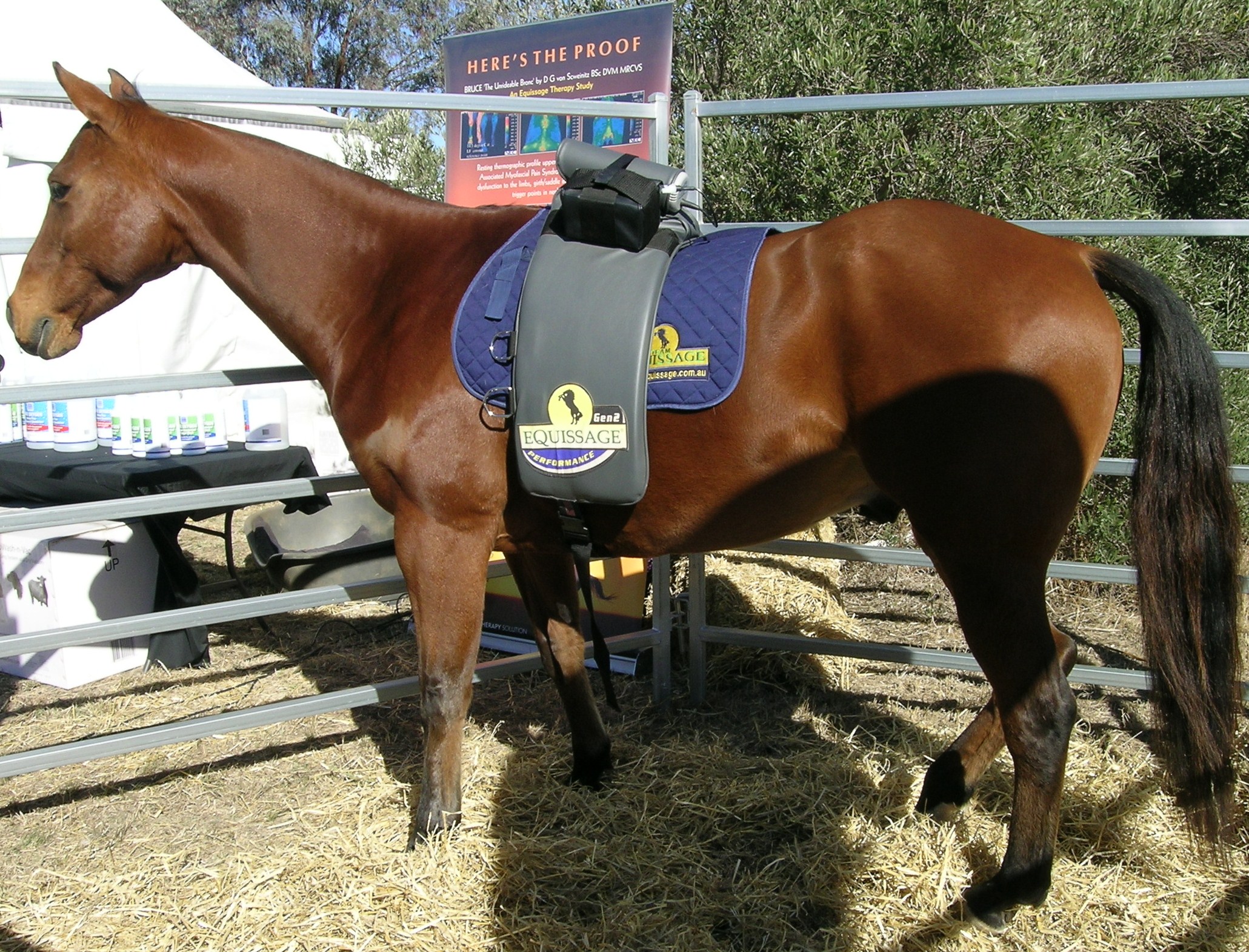
The science is thinner than the marketing
One proper trial exists on percussive therapy in horses. In a randomized blinded crossover, twelve polo horses got two 12-minute percussive sessions, device on or off, 24 hours apart. Researchers measured back pain thresholds, spinal movement, and stride length. No significant difference in pain threshold or stride length versus the sham. Minor changes to the back profile, and that was it.
The marketing copy comes from human studies, where percussion increases blood flow and range of motion. But a horse is not a large human. Thicker skin and a tougher epidermis mean a human gun's intensity can be too much, which is why equine guns use larger heads and gentler settings.
A gun is not a massage, and massage has the better evidence
Real massage, with hands, has actual data. A 2025 pilot study on five recreational horses found massage lowered salivary cortisol and reduced conflict behaviors. In racehorses, massage or relaxing music lowered cortisol, and thrice-weekly sessions over six months cut it before and after exercise. Swedish massage twice a week for five weeks improved neck, back, and shoulder flexibility. One study found endurance horses massaged thrice weekly won more than controls.
Hands feel the knot, sense the flinch, and adjust. A gun hammers one spot and learns nothing.
Where a gun earns its keep: warm-up, not treatment
Before a ride, a few minutes on the big muscle groups gets blood moving: neck, shoulder, the back alongside the spine, hindquarters. After work, low settings on tired muscles take the edge off stiffness.
The rules are conservative. Stay on muscle. Never run it on the spine, legs, joints, tendons, or head. Start on the lowest setting, keep sessions short, and if you would not press your thumb hard into a spot, do not press a jackhammer into it either.
The horse is the gauge
A horse that likes it drops its head, softens its eye, licks and chews, yawns, and leans into the pressure. One that does not pins its ears, tenses, swishes its tail, or walks off. Stop when the horse says stop.
Introduce it like clippers: let the horse sniff it powered off, run it over the body while off, then switch it on and let the horse feel the vibration through your hand before the head touches him. Most accept it within a session or two; the ones that do not are giving you information.
It does not diagnose anything
The AAEP position: get a veterinary diagnosis first. Bodywork complements treatment; it does not replace it. A sore back can be saddle fit, kissing spines, ulcers, or a sore sacroiliac joint. Running a gun over an undiagnosed problem just warms up a problem. If soreness does not improve with a few days of light work and warm-up, call the vet before buying more equipment.
If you still want one, do not spend Theragun money on a horse. Owners on the Chronicle of the Horse forums report using the Bodybay massage gun, a budget unit with 20 speeds, because fine speed control matters more than brand name. Whatever you buy, start low and let the horse vote.